Search
 русский
 Español
 عربى
عربى
Particle Size Capability
The Ceramic Ring Wear Resistant Pipe is designed to handle fine to coarse abrasive solids with high resistance to sliding and impingement wear. In most slurry and pneumatic conveying systems, such pipes reliably process particle sizes from sub-micron fines up to approximately 10–25 mm without accelerated surface degradation, provided the flow regime is stable and impact energy is controlled. Fine and medium particles primarily cause sliding abrasion, which advanced alumina or zirconia ceramic rings resist extremely well due to their high hardness (typically 85–90+ HRA). Coarser particles introduce impact and point loading, especially at bends or transitions. While the ceramic itself resists abrasion, excessive impact from oversized or angular particles can induce micro-cracking or localized chipping if velocities are high. Compared with rubber-lined or hardened steel pipes, the Ceramic Ring Wear Resistant Pipe maintains dimensional stability and wear resistance across broader particle size range, but it must be properly specified for particle geometry, angularity, and impact angles to avoid mechanical damage rather than wear-driven degradation.
Slurry Velocity Range
A Ceramic Ring Wear Resistant Pipe is particularly suited for medium to high slurry velocities, where conventional metallic pipes experience rapid erosion. In most industrial applications, reliable operation is achieved at 2 to 6 m/s in slurry transport, and in some well-engineered systems, velocities of up to 8–10 m/s can be sustained without excessive liner wear. At lower velocities, sedimentation and localized abrasion may occur, while at excessively high velocities, impact forces at elbows, reducers, and entry points may exceed the fracture toughness limits of the ceramic material or the bonding system between the rings and the steel substrate. The key advantage of ceramic ring construction is that it distributes wear uniformly around the circumference while maintaining a smooth internal profile, reducing turbulent eddies that accelerate erosion. Compared to rubber or polymer linings, ceramic systems maintain structural integrity at much higher velocities, but correct hydraulic design is essential to prevent mechanical shock loading that could cause cracking rather than gradual wear.
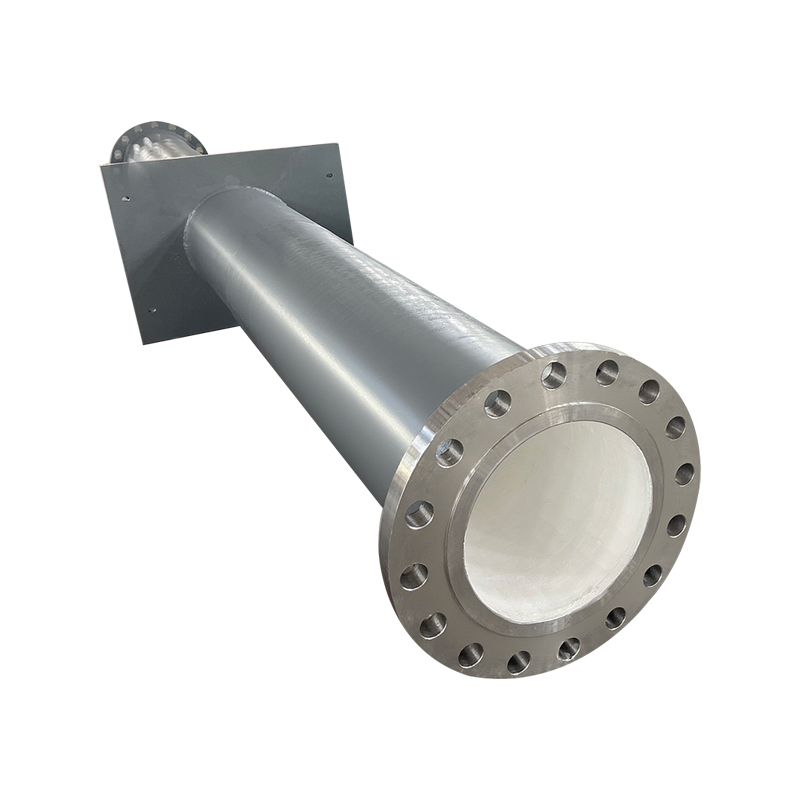
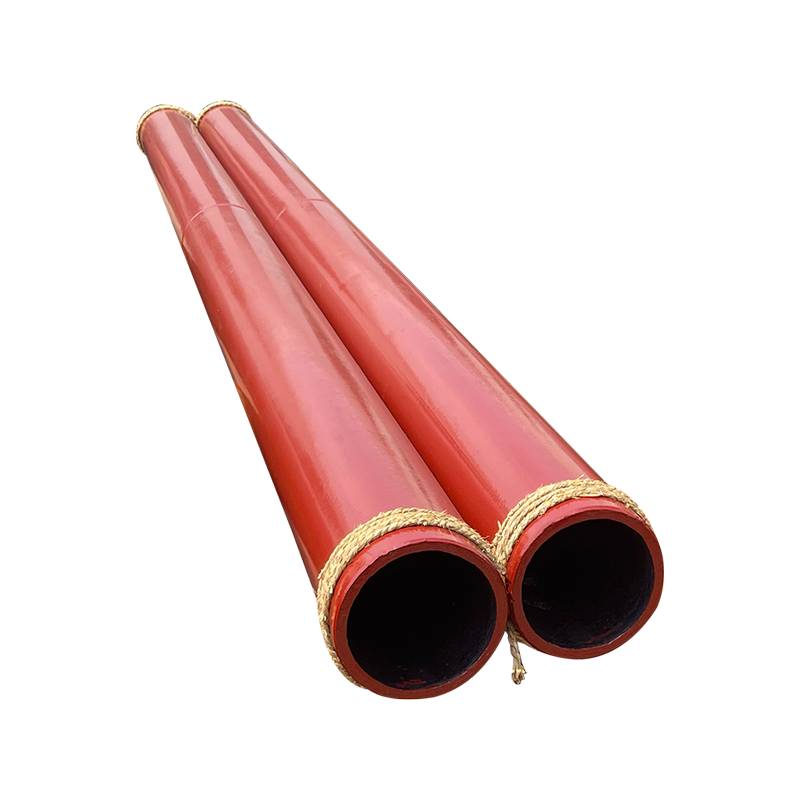
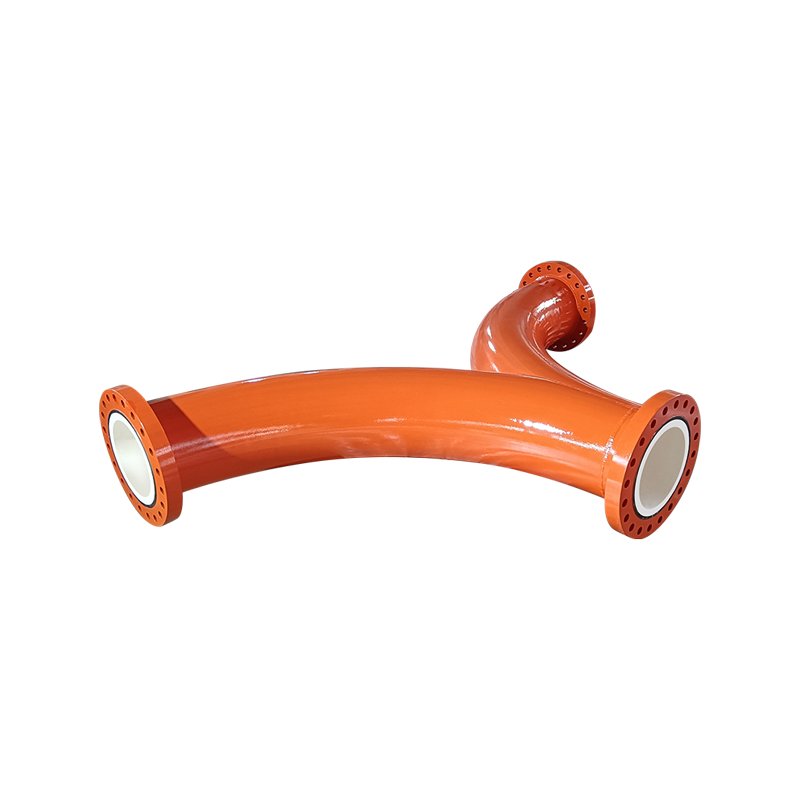
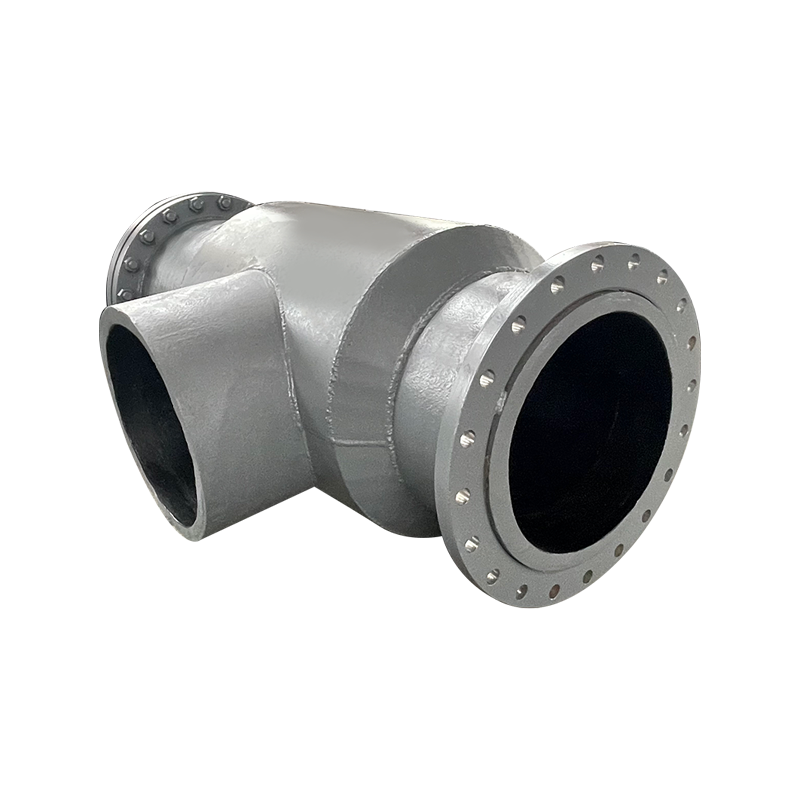
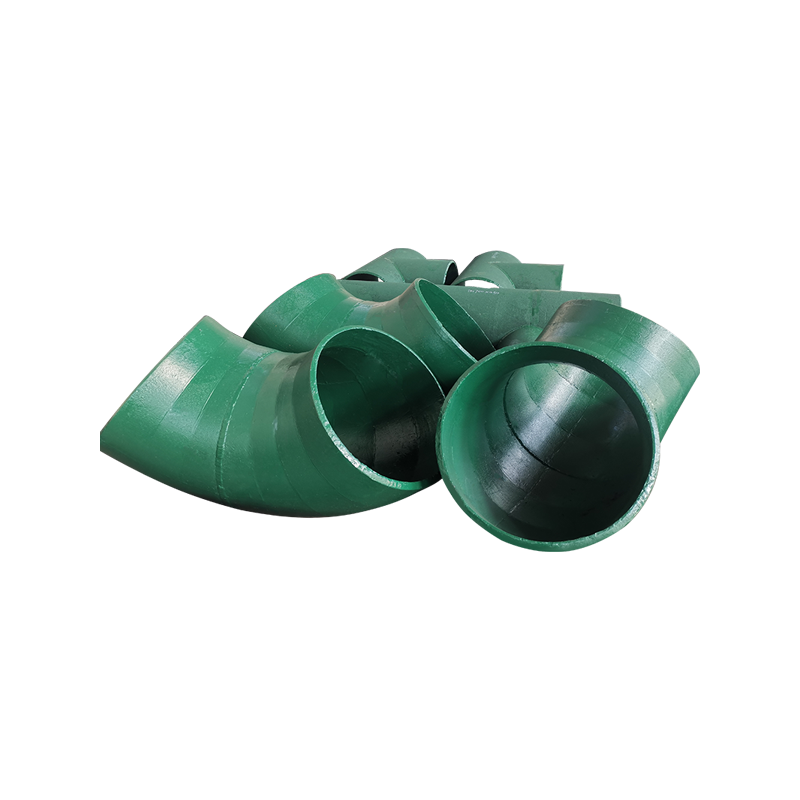
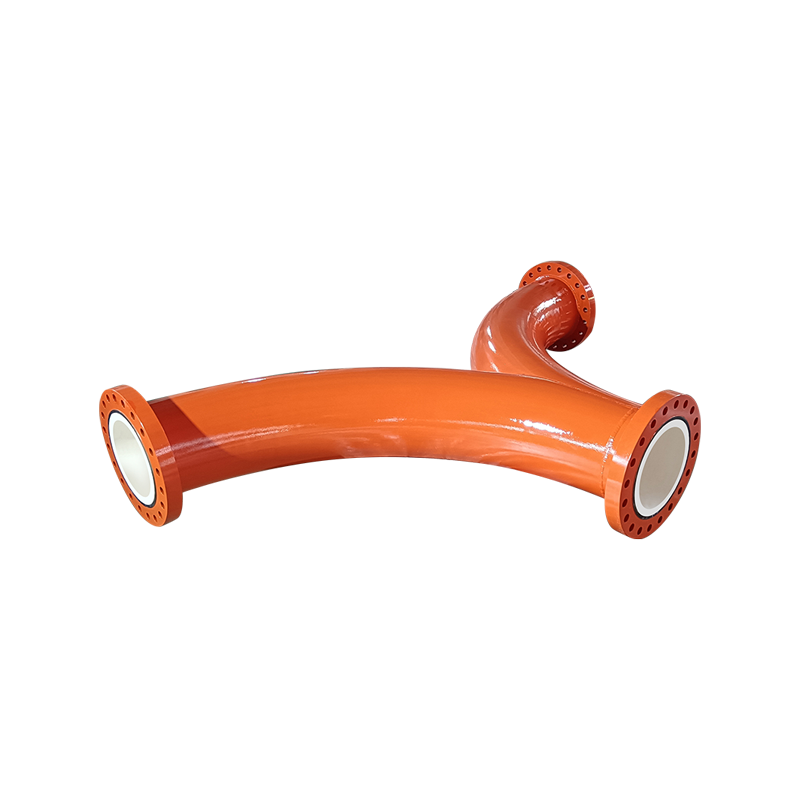
Ceramic ring wear resistant pipe
Solids Concentration Tolerance
A Ceramic Ring Wear Resistant Pipe performs reliably across a wide range of slurry concentrations, typically from 10% up to 60–70% by weight, depending on particle size distribution and carrier fluid viscosity. At low to moderate concentrations, wear is dominated by particle–wall interaction, which ceramics resist extremely well. At high concentrations, inter-particle interactions increase, leading to higher bulk density, greater normal forces on the pipe wall, and increased abrasive energy per unit area. Unlike rubber linings, which may deform or tear under heavy loads, and steel pipes, which erode rapidly under dense slurry flow, ceramic rings maintain their hardness and dimensional stability even at elevated solids loading. However, extremely high concentrations combined with large particle sizes and high velocities can generate impact forces that challenge ceramic fracture resistance rather than wear resistance. For this reason, system designers typically specify ceramic-lined pipes when high concentration transport is required, but with controlled velocities and proper flow transitions to minimize impact damage.
Engineering Considerations for Liner Integrity
The long-term reliability of a Ceramic Ring Wear Resistant Pipe depends not only on material properties but also on mechanical design and installation quality. Proper ring bonding—whether via high-strength epoxy, vulcanized rubber interlayers, or mechanical locking—ensures that the ceramic segments remain securely fixed under hydraulic forces and vibration. Abrupt flow direction changes, poorly aligned joints, or improper welding near lined sections can introduce localized stresses that exceed ceramic fracture limits even when wear rates are low. When correctly designed, installed, and operated within specified velocity and particle impact parameters, ceramic ring systems consistently outperform metallic, rubber-lined, and polymer-lined pipes in abrasive service, offering dramatically extended service life with minimal liner degradation.
Ceramic ring wear resistant pipe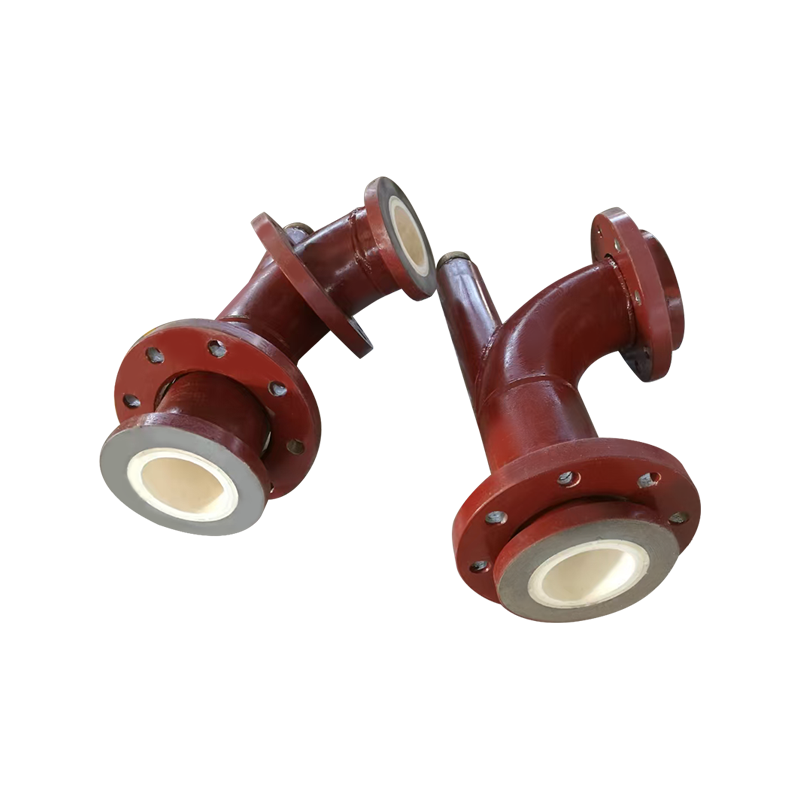
Typical Operating Envelope (Indicative)
-
Particle Size: Fine powders to ~10–25 mm coarse solids (larger sizes require impact-controlled design)
-
Slurry Velocity: ~2–6 m/s (up to ~8–10 m/s with optimized flow geometry)
-
Solids Concentration: ~10–60% by weight (higher possible with controlled velocity and particle size)