Search
 русский
 Español
 عربى
عربى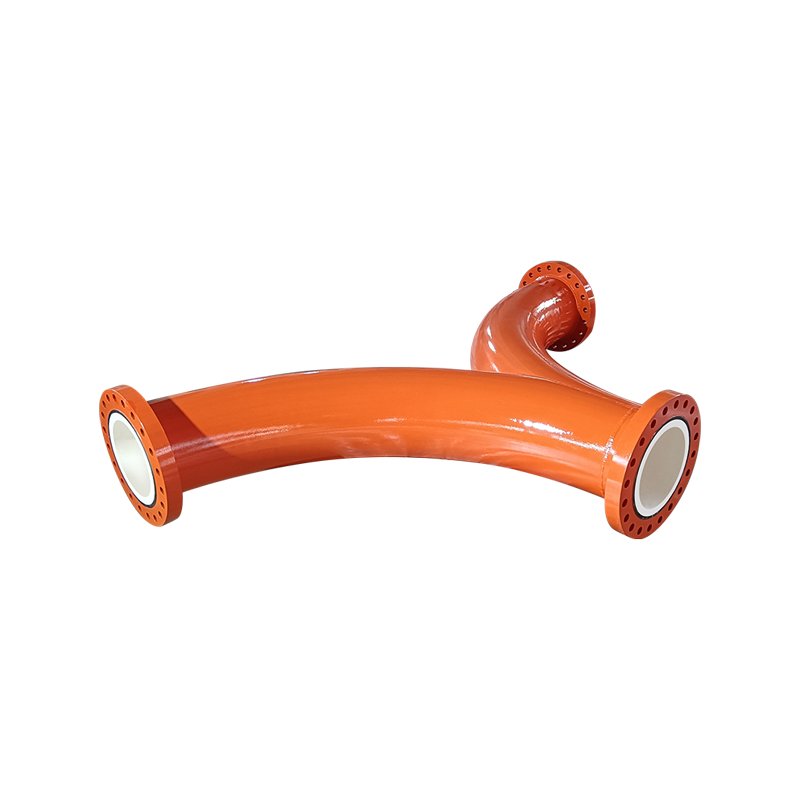
When it comes to seismic and mechanical vibration resistance, integral ceramic-lined pipe outperforms ceramic ring wear resistant pipe in most dynamic loading scenarios. The segmented ring design of ceramic ring wear resistant pipe introduces inter-ring joints that become stress concentration points under oscillating or impact loads, whereas a continuous ceramic lining distributes vibration energy more uniformly across the pipe body. However, ceramic ring wear resistant pipe still offers acceptable vibration tolerance in low-to-moderate frequency environments and remains the more practical and cost-effective choice for many industrial applications.
Understanding the Structural Difference
The core distinction between these two pipe types lies in how the ceramic layer is constructed inside the steel casing.
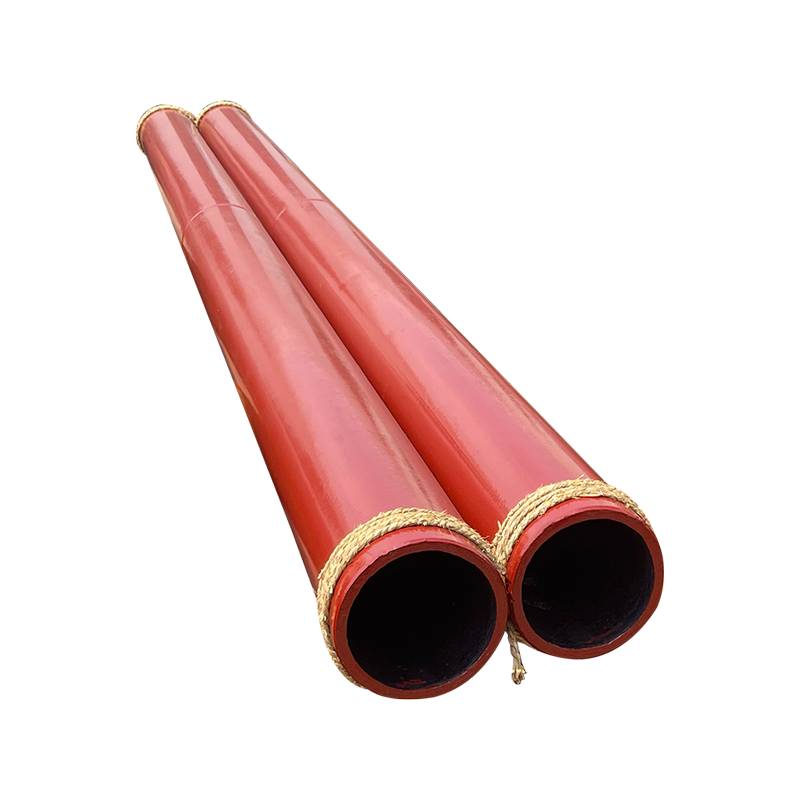
Ceramic ring wear resistant pipe is assembled by inserting pre-sintered alumina ceramic rings (typically 92%–95% Al₂O₃) into a steel shell. The rings are arranged sequentially along the pipe's length, with small gaps or adhesive joints between each segment. This modular approach allows for easier manufacturing and replacement but creates discrete mechanical interfaces throughout the lining.
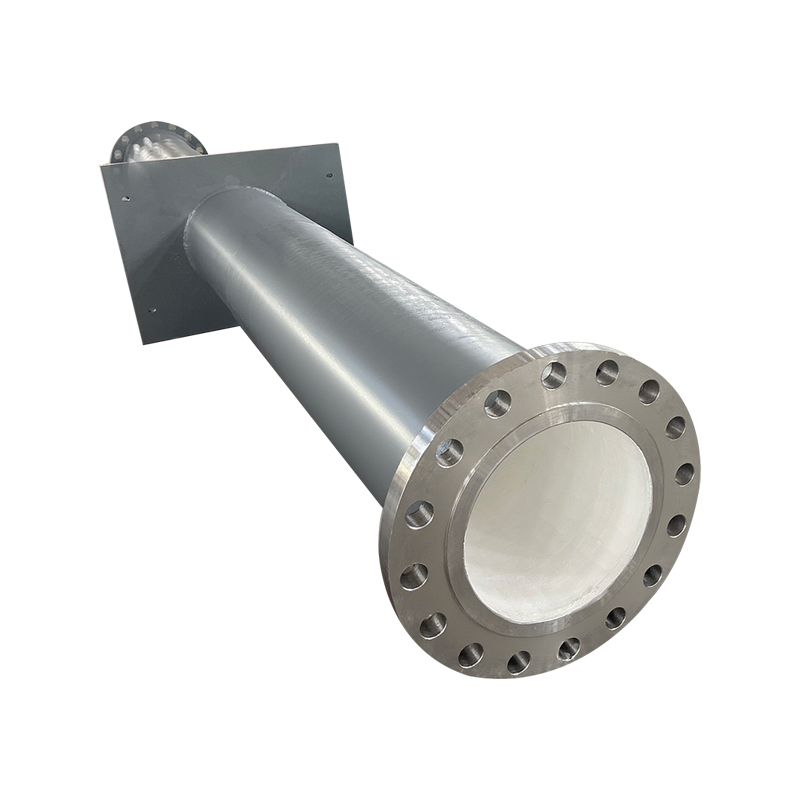
Integral ceramic-lined pipe, by contrast, is produced using a self-propagating high-temperature synthesis (SHS) or centrifugal casting process, which fuses a continuous ceramic layer — usually Al₂O₃ — directly onto the inner steel wall. There are no joints, segments, or adhesive layers. The ceramic and steel bond at a metallurgical level, producing a monolithic composite structure.
ceramic ring wear resistant pipe
How Vibration Loads Affect Each Pipe Type
Ceramic Ring Wear Resistant Pipe Under Vibration
In ceramic ring wear resistant pipe, mechanical vibration — whether from pumps, compressors, seismic events, or structural movement — applies cyclic stress across every inter-ring joint. Over time, this can cause:
- Micro-cracking at ring edges due to repeated tensile and shear loading
- Adhesive bond fatigue between the ceramic ring and the steel casing
- Ring displacement or loosening, especially in horizontal installations
- Accelerated wear at exposed joint gaps when abrasive media passes through
Field data from mining slurry systems shows that ceramic ring wear resistant pipe installed near high-vibration pump discharge points typically requires inspection every 6–12 months to check for ring loosening, compared to 18–24 months for pipes installed in calmer sections of the same circuit.
Integral Ceramic-Lined Pipe Under Vibration
The continuous, joint-free inner surface of integral ceramic-lined pipe provides significantly better resistance to vibration-induced failure. Because the ceramic layer is fused metallurgically to the steel, there are no bonding interfaces to fatigue. Vibration energy is absorbed and dissipated through the composite steel-ceramic wall as a unified system.
In seismic zone applications — such as pipelines in mining regions of Chile or Peru rated for Zone 3–4 seismic activity — integral ceramic-lined pipe has demonstrated less than 2% lining failure rate over 5-year service periods, compared to reported ring displacement rates of 8–15% for segmented ring designs in similar environments.
Head-to-Head Comparison: Key Performance Metrics
| Performance Factor | Ceramic Ring Wear Resistant Pipe | Integral Ceramic-Lined Pipe |
|---|---|---|
| Structural continuity | Segmented (ring joints present) | Monolithic (no joints) |
| Vibration frequency tolerance | Low to moderate (<50 Hz) | Low to high (<200 Hz) |
| Seismic zone suitability | Zone 1–2 (low seismicity) | Zone 1–4 (moderate to high) |
| Bond failure risk over 5 years | 8–15% (vibration-exposed zones) | <2% |
| Impact resistance (single blow) | Moderate (ring may crack locally) | Moderate to good |
| Inspection interval (vibration zone) | 6–12 months | 18–24 months |
| Unit cost (relative) | Lower (20–40% less) | Higher |
| Field replaceability | Rings replaceable on-site | Full pipe section replacement |
Critical Installation Factors That Influence Vibration Performance
The gap between the two pipe types narrows significantly when ceramic ring wear resistant pipe is correctly installed and supported. Several installation variables directly affect how well the segmented ring design handles dynamic loads:
- Support spacing: Reducing pipe support intervals from a standard 3–4 m to 1.5–2 m in vibration-prone zones measurably reduces bending stress on ring joints.
- Adhesive selection: High-modulus epoxy adhesives (Shore D hardness ≥80) used between rings and casing improve bond fatigue life compared to standard construction adhesives.
- Flexible couplings: Installing vibration-damping flexible connectors at pump discharge nozzles reduces transmitted vibration amplitude to ceramic ring wear resistant pipe by up to 60%.
- Ring gap management: Maintaining consistent ring gaps of ≤0.5 mm during assembly prevents abrasive particles from wedging into joints and generating secondary stress.
With these measures in place, ceramic ring wear resistant pipe has been successfully deployed near vibrating screens and ball mills in concentrator plants — environments that would otherwise favor integral lining solutions.
When to Choose Each Pipe Type
Choose Ceramic Ring Wear Resistant Pipe When:
- The installation site has low-to-moderate vibration levels (e.g., gravity-fed transport lines, tailings storage pipelines)
- Budget constraints make the 20–40% cost advantage of ceramic ring wear resistant pipe decisive
- On-site ring replacement capability is important to minimize downtime
- The pipeline is in a low seismic zone (Zone 1 or 2) with no significant dynamic loading
Choose Integral Ceramic-Lined Pipe When:
- The pipe is installed near pumps, compressors, vibrating screens, or other high-frequency vibration sources
- The project is located in a seismically active region (Zone 3 or above)
- Long service intervals with minimal maintenance access are required
- The conveyed media contains fine abrasives (<1 mm) that could penetrate inter-ring gaps in a segmented design
Real-World Application Example
A copper concentrator in Xinjiang, China, running a 200 mm diameter slurry line with 35% solids concentration evaluated both pipe types for a 480-meter run that passed through a pump station. The section within 20 meters of pump flanges was fitted with integral ceramic-lined pipe, rated for the high-vibration zone. The remaining 460 meters used ceramic ring wear resistant pipe to control costs.
After 36 months of continuous operation, the integral ceramic section showed zero lining failures. The ceramic ring section recorded three instances of ring loosening, all within 5 meters of the transition coupling — confirming that residual vibration transmission, even after flexible joint installation, can affect the nearest rings of the segmented design.
This hybrid approach — using integral ceramic-lined pipe in dynamic zones and ceramic ring wear resistant pipe in stable sections — is increasingly recommended by pipeline engineers as a practical and economically sound design strategy.
Integral ceramic-lined pipe holds a clear structural advantage over ceramic ring wear resistant pipe in high-vibration and seismically active environments, owing to its joint-free monolithic construction. However, ceramic ring wear resistant pipe remains a highly viable solution across the majority of industrial wear applications where vibration is moderate and controllable. The smartest engineering decision is not always choosing one exclusively over the other, but deploying each where its structural characteristics are best matched to the operating conditions.