Search
 русский
 Español
 عربى
عربى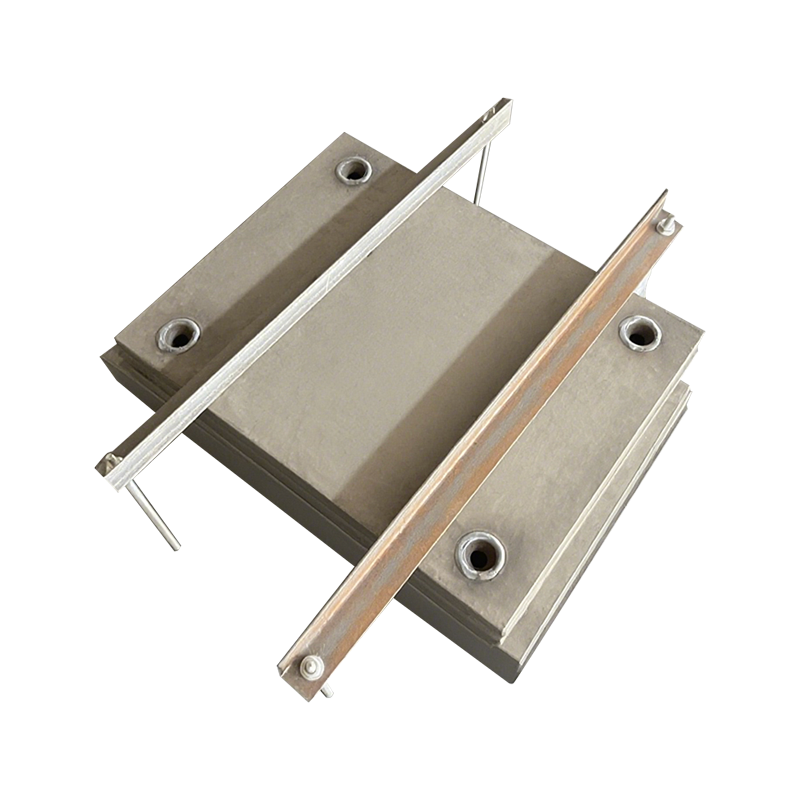
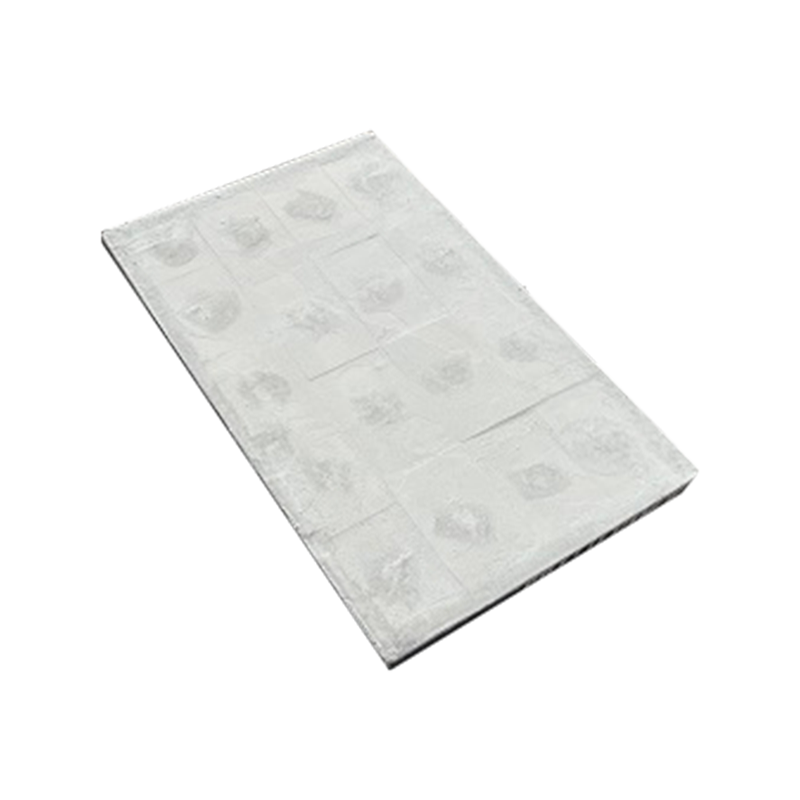
Mirror surfacing wear-resistant lining is significantly harder than both traditional rubber lining and ceramic tile lining in most measurable categories. As a category of industrial wear-resistant lining, the mirror surfacing variant typically achieves a surface hardness in the range of HRC 58–65, depending on the alloy composition and heat treatment process. By contrast, rubber lining operates at Shore A hardness of 40–80 (roughly equivalent to HRC <20), and standard alumina ceramic tile lining ranges from HV 1200–1800 (Vickers), which translates to approximately HRC 68–72 at the very top end — though ceramic hardness comes at the cost of brittleness and impact resistance.
This means that for most abrasion-intensive industrial environments — such as mining, slurry transport, and bulk material handling — mirror surfacing wear-resistant lining offers a balanced hardness profile that outperforms rubber while remaining more impact-tolerant than brittle ceramic tile.
Understanding Hardness Measurement: HRC, HV, and Shore A
Before comparing materials, it is important to understand what hardness scales are actually measuring, since different wear-resistant lining products are rated on different scales:
- HRC (Rockwell C) — Used primarily for hard metals and alloys. Measures resistance to indentation under a diamond cone. Relevant range: HRC 20–70.
- HV (Vickers) — Used for ceramics and very hard materials. Measures indentation by a pyramid diamond under load. 1 HRC ≈ 10 HV at the 60+ range.
- Shore A / Shore D — Used for elastomers and soft polymers like rubber. Shore A 80 is roughly equivalent to Shore D 30, far softer than any metallic wear-resistant lining.
Mirror surfacing wear-resistant lining is typically rated on the HRC scale because its base material is a high-chromium cast iron, alloyed steel, or tungsten carbide composite — all metallic in nature. This makes direct comparison with rubber (Shore A) difficult without conversion, but the difference is stark: HRC 60 is orders of magnitude harder than Shore A 70.
wear-resistant lining
Hardness Comparison Table: Mirror Surfacing vs Rubber vs Ceramic
| Property | Mirror Surfacing Wear-Resistant Lining | Rubber Lining | Ceramic Tile Lining (Alumina) |
|---|---|---|---|
| Hardness | HRC 58–65 | Shore A 40–80 | HV 1200–1800 (~HRC 68–72) |
| Wear Resistance | Excellent (abrasion + erosion) | Moderate (fine particles only) | Excellent (abrasion only) |
| Impact Resistance | High | Very High (elastic absorption) | Low (brittle fracture risk) |
| Surface Finish (Ra) | <0.4 µm (mirror-polished) | 1.6–6.3 µm | 0.8–3.2 µm |
| Max Operating Temp. | 300–500°C | 60–120°C | 600–1200°C |
| Typical Service Life (slurry) | 5–10 years | 1–3 years | 3–6 years (with crack risk) |
| Installation Complexity | Moderate | Low | High (adhesive + curing) |
Why Hardness Alone Does Not Tell the Full Story
A common mistake when selecting industrial wear-resistant lining is equating maximum hardness with maximum wear resistance. While hardness is a critical factor, it must be evaluated alongside toughness (the ability to absorb impact without fracturing), surface finish, and the nature of the abrasive particles involved.
The Hardness–Toughness Trade-off
Ceramic tile lining may achieve HV 1800 (approximately HRC 72), making it harder than mirror surfacing wear-resistant lining on paper. However, ceramics have near-zero fracture toughness — typically 3–5 MPa·m½ compared to 15–30 MPa·m½ for high-chromium metallic linings. This means that in applications involving large, angular particles (greater than 10 mm) or intermittent impact loads, ceramic lining tiles will crack and spall, requiring early replacement. Mirror surfacing wear-resistant lining absorbs these loads without fracture due to its metallic matrix structure.
Rubber Lining's Deceptive Softness
Rubber lining's softness (Shore A 40–80) is not a disqualifying weakness in all applications. Rubber excels in fine particle slurry environments where particle sizes are below 3 mm, because the elastic surface deforms around particles and expels them before cutting wear can occur. However, for coarse angular particles above 5 mm, rubber lining wears 3–5 times faster than mirror surfacing wear-resistant lining under identical conditions.
Mirror Surfacing Wear-Resistant Lining vs Rubber Lining: Key Differentiators
The most common replacement scenario in the field is upgrading from rubber lining to mirror surfacing wear-resistant lining. The following points summarize where and why the switch delivers measurable ROI:
- Temperature limits: Rubber lining begins to soften and degrade above 80°C, while mirror surfacing wear-resistant lining maintains full hardness up to 300°C. In dryer discharge chutes or hot ore handling, rubber lining failure within 6–12 months is common.
- Surface friction: Mirror surfacing wear-resistant lining achieves Ra <0.4 µm (mirror finish), reducing material adhesion and flow resistance by up to 30% compared to rubber's Ra 1.6–6.3 µm. This is particularly significant in cyclone separators and slurry pipelines.
- Chemical resistance: In strongly acidic environments (pH < 3), rubber lining may swell or delaminate within 12–18 months. Mirror surfacing wear-resistant lining, when manufactured with a corrosion-resistant alloy layer, can withstand pH 2–12 environments for 4–6 years.
- Dimensional stability: Rubber is prone to creep under sustained compressive loads, causing inconsistent liner thickness over time. Mirror surfacing wear-resistant lining maintains its geometry throughout its service life.
Mirror Surfacing Wear-Resistant Lining vs Ceramic Tile Lining: Key Differentiators
Choosing between mirror surfacing wear-resistant lining and ceramic tile lining is a more nuanced decision, as both offer high hardness. The critical differentiators are:
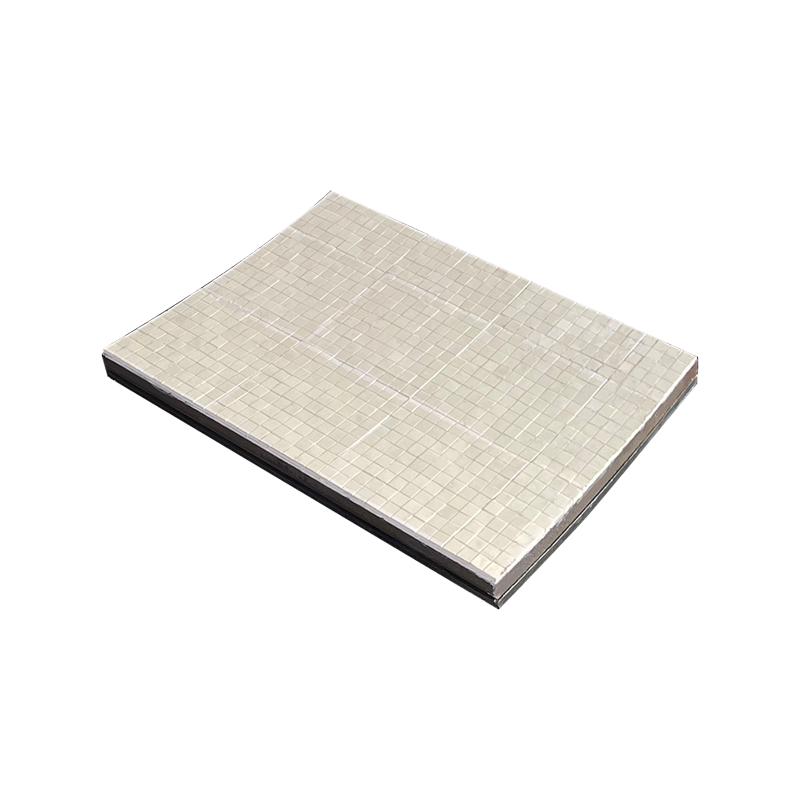
- Impact loading: In applications with large falling rocks or repeated impact (e.g., crusher feed hoppers, mill discharge chutes), ceramic tile lining can fracture within weeks, while mirror surfacing wear-resistant lining typically survives for years under the same conditions.
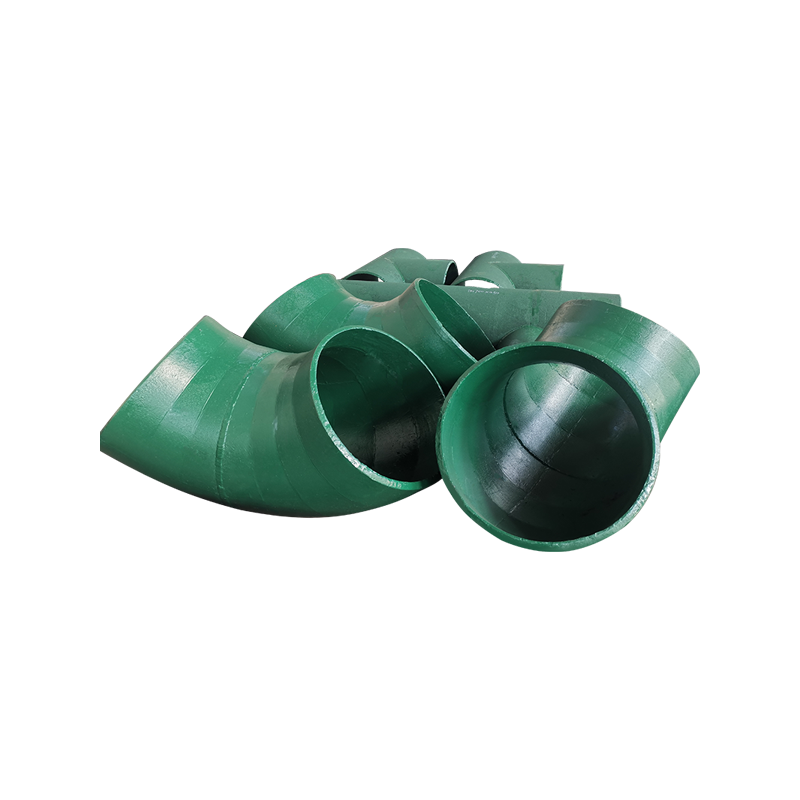
- Installation on curved surfaces: Ceramic tiles must be cut and individually adhered, making curved pipe sections and transition elbows costly and time-intensive to line. Mirror surfacing wear-resistant lining panels can be fabricated to fit curved geometries more readily, reducing installation time by 30–50%.
- Field repair: A cracked ceramic tile panel cannot be repaired on-site — the entire section must be replaced. Mirror surfacing wear-resistant lining can, in many cases, be welded or patched in the field, reducing downtime costs significantly.
- Pure abrasion environments: In high-temperature, fine-particle abrasion environments with minimal impact (e.g., coal ash handling above 200°C), ceramic tile lining may still be the correct choice over mirror surfacing wear-resistant lining due to its superior hardness and thermal stability above 400°C.
Selecting the Right Lining: A Practical Decision Framework
Based on hardness performance and application characteristics, the following framework guides the selection of the most suitable wear-resistant lining for your operation:
- Particle size <3 mm, low impact, cool environment: Rubber lining remains a cost-effective wear-resistant lining option that is easy to install.
- Particle size 3–30 mm, mixed abrasion and impact, temperature <300°C: Mirror surfacing wear-resistant lining is the optimal choice — superior to rubber in hardness, superior to ceramic in toughness.
- Particle size <5 mm, minimal impact, temperature >400°C: Ceramic tile lining may outperform mirror surfacing wear-resistant lining due to its extreme hardness and thermal stability.
- Combined abrasion, corrosion, and moderate impact: Mirror surfacing wear-resistant lining with a corrosion-resistant alloy coating is typically the best all-round solution.
In practice, the majority of mining, cement, and bulk materials handling operations fall into category 2, which explains the growing preference for mirror surfacing wear-resistant lining as a replacement for both rubber and ceramic solutions over the past decade.