Search
 русский
 Español
 عربى
عربى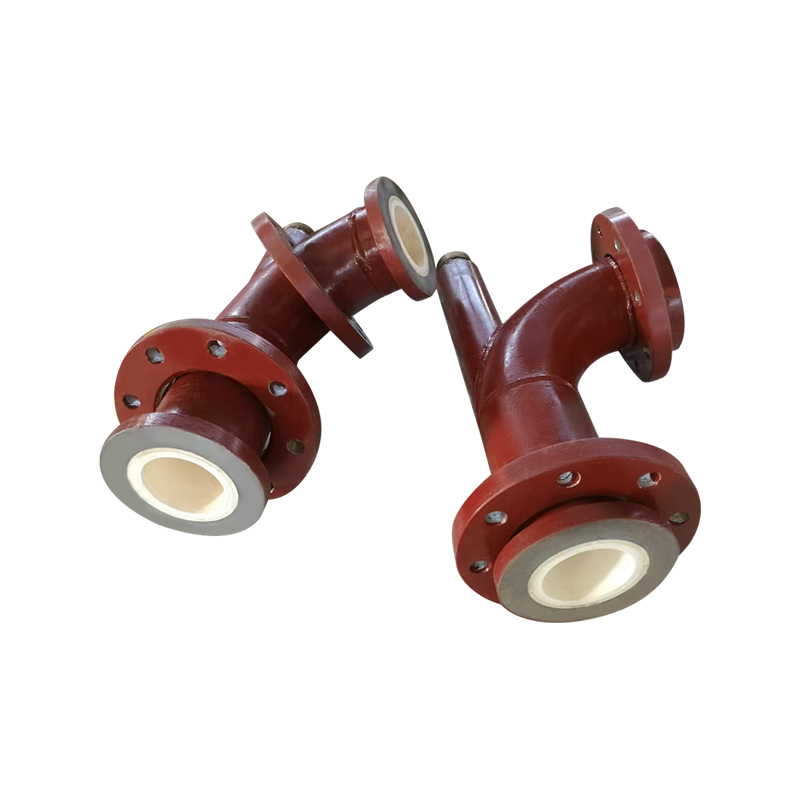
When handling large-particle, high-velocity slurry, bimetal composite pipe leads in impact resistance, followed by cast stone pipe, with ceramic ring wear resistant pipe ranking third in pure impact tolerance. However, this ranking does not make ceramic ring wear resistant pipe a poor choice — its superior abrasion resistance often compensates for its lower impact toughness in many real-world slurry applications. The right selection depends heavily on particle size distribution, flow velocity, and the relative proportion of abrasive wear versus impact loading in the specific pipeline.
Why Impact Resistance Matters in Large-Particle Slurry Systems
Large-particle slurry — defined broadly as slurry containing solid particles exceeding 10 mm in diameter — generates a qualitatively different wear mechanism compared to fine-particle slurry. At flow velocities above 3–5 m/s, particles of this size deliver repeated high-energy impacts against the pipe wall, particularly at bends, reducers, and tee junctions. Each impact event transfers kinetic energy directly into the lining material, creating localized stress concentrations that can fracture brittle liners even before abrasive wear becomes the dominant failure mode.
In a coal preparation plant handling raw coal particles up to 50 mm at 4 m/s, for example, the pipe lining at the first downstream elbow can absorb thousands of discrete impact events per hour. Under these conditions, a material's fracture toughness (K₁c) and ductility become as important as its hardness rating. This is the operating environment where the differences between ceramic ring wear resistant pipe, cast stone pipe, and bimetal composite pipe become most consequential.
Impact Resistance Profile of Ceramic Ring Wear Resistant Pipe
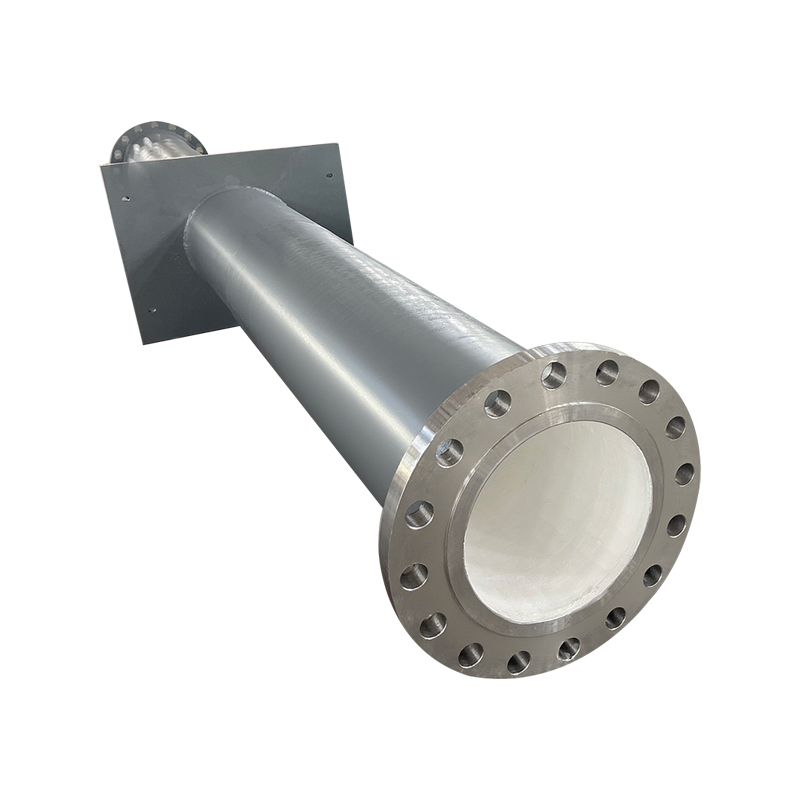
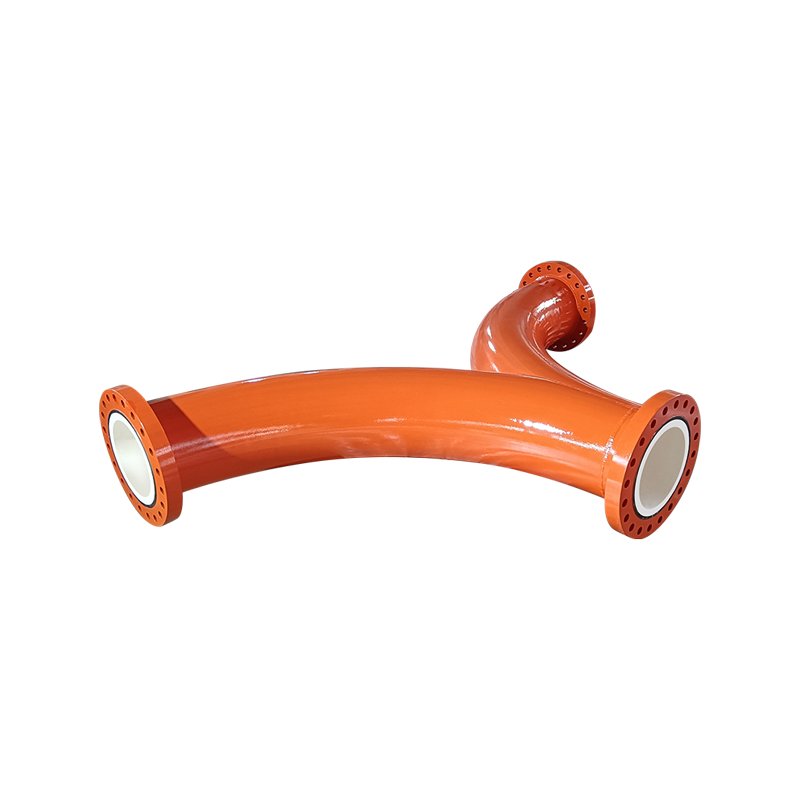
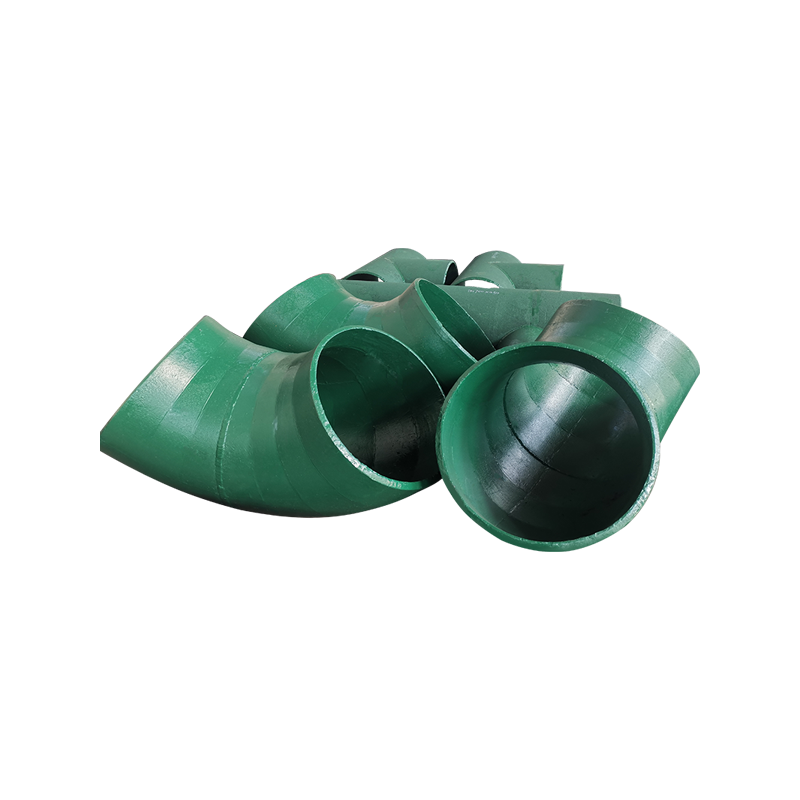
Ceramic ring wear resistant pipe uses high-alumina ceramic rings (typically 92%–95% Al₂O₃) as its inner lining. Alumina ceramic is an inherently brittle material with a fracture toughness of approximately 3–5 MPa·m½ — significantly lower than metals or composite materials. Under single large-particle impact, a ceramic ring can develop radial micro-cracks, and in severe cases, a ring may shatter locally if the impact energy exceeds the material's fracture threshold.
The segmented ring design does provide one indirect benefit: a cracked or broken ring can be replaced individually without discarding the entire pipe section. However, a fractured ring that is not detected promptly exposes the steel casing to direct slurry contact, accelerating overall pipe degradation.
Ceramic ring wear resistant pipe performs best when particle size is below 20 mm and velocity stays under 4 m/s. Beyond these thresholds, impact-induced ring cracking becomes a statistically significant failure mode rather than an exception.
Impact Resistance Profile of Cast Stone Pipe
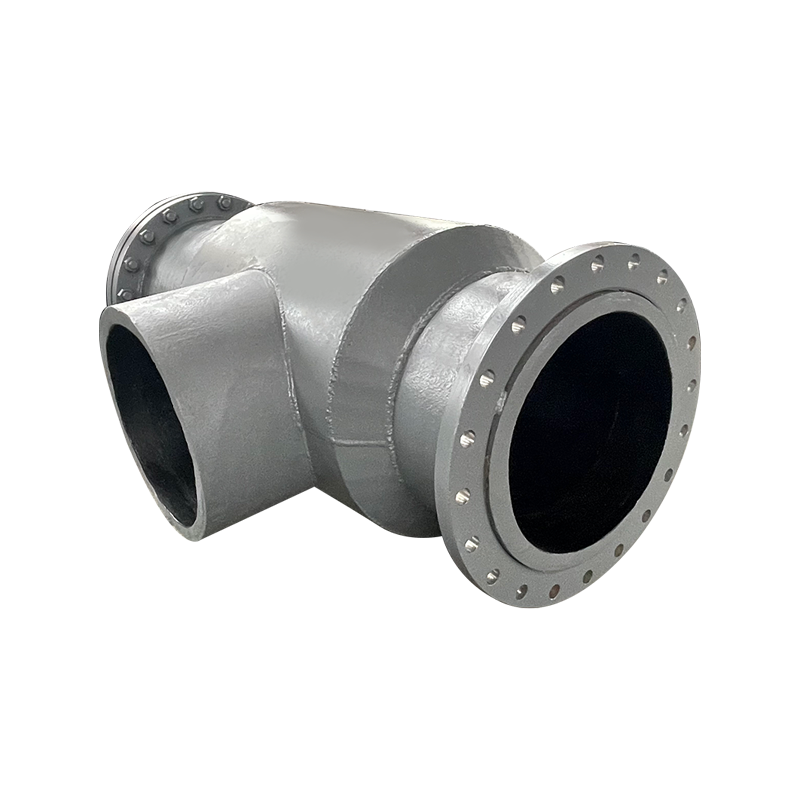
Cast stone pipe — also called basalt cast pipe or diabase cast pipe — is manufactured by melting volcanic rock and casting it into pipe form, then annealing to relieve internal stress. The resulting material has a Mohs hardness of 7–8 and a fracture toughness in the range of 1.5–3 MPa·m½, which is actually lower than alumina ceramic in most grades.
Despite this, cast stone pipe handles moderate impact reasonably well in practice because its lining is monolithic — there are no inter-segment joints to act as crack initiation sites. A distributed impact load spreads across a larger continuous area rather than concentrating at a joint edge. However, cast stone pipe is highly vulnerable to thermal shock and point impacts from angular particles. A single large angular rock striking a cast stone elbow at 5+ m/s can produce a through-crack in the lining, particularly in cold operating environments where brittleness increases.
Cast stone pipe is most reliably used for transporting fine to medium abrasive slurry (particles under 30 mm, rounded morphology) at moderate velocities of 2–4 m/s. It is widely used in the chemical, mining, and power industries for ash and tailings transport where particle size is controlled.
ceramic ring wear resistant pipe
Impact Resistance Profile of Bimetal Composite Pipe
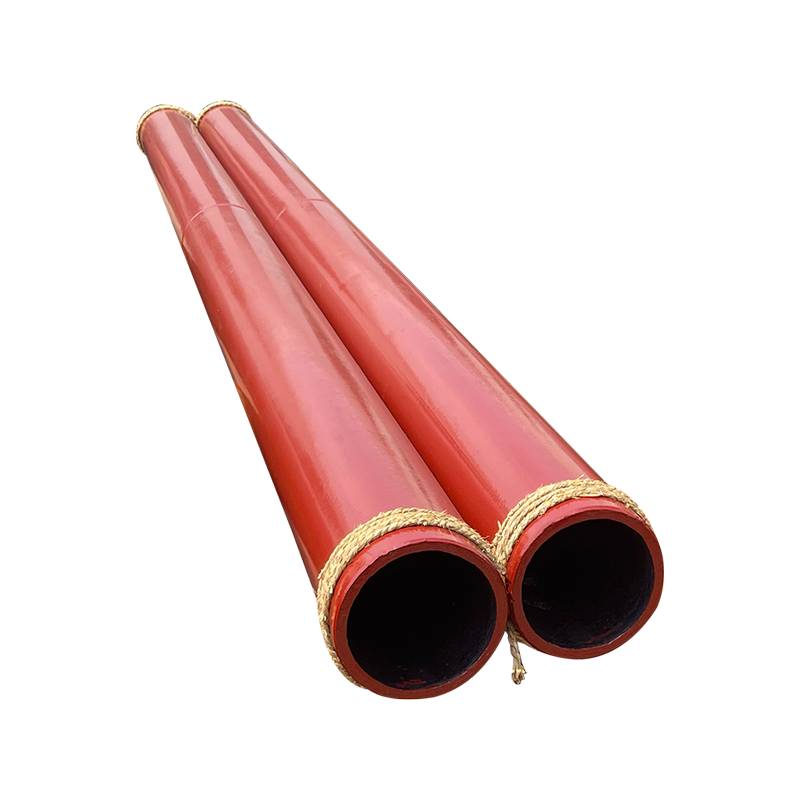
Bimetal composite pipe consists of an outer carbon steel or alloy steel shell with an inner lining of high-chromium white cast iron (typically 26–28% Cr content) or other wear-resistant alloy, bonded through centrifugal casting or co-extrusion. The inner lining achieves a hardness of HRC 58–65, while the outer steel layer retains substantial toughness and ductility.
This dual-layer architecture is specifically designed to handle combined abrasion and impact. The hard inner surface resists abrasive wear, while the tough outer steel absorbs and dissipates impact energy before it can propagate as a fracture. Fracture toughness of the composite system effectively exceeds 20–30 MPa·m½ when measured at the structural level — an order of magnitude better than either ceramic or cast stone linings.
In large-particle applications such as iron ore concentrate transport (particles up to 80 mm, velocities of 5–7 m/s), bimetal composite pipe consistently outperforms the alternatives, with reported service lives of 3–5 years in conditions that would destroy a ceramic ring or cast stone pipe within 12–18 months.
Direct Comparison Across Key Impact Parameters
| Parameter | Ceramic Ring Wear Resistant Pipe | Cast Stone Pipe | Bimetal Composite Pipe |
|---|---|---|---|
| Lining hardness | HV 1000–1200 (Al₂O₃) | Mohs 7–8 | HRC 58–65 |
| Fracture toughness (K₁c) | 3–5 MPa·m½ | 1.5–3 MPa·m½ | >20 MPa·m½ (composite) |
| Max recommended particle size | <20 mm | <30 mm (rounded) | Up to 80 mm |
| Max recommended velocity | ≤4 m/s | 2–4 m/s | Up to 8 m/s |
| Abrasion resistance | Excellent | Good | Good to Very Good |
| Impact resistance rating | Low–Moderate | Low–Moderate | High |
| Typical service life (heavy slurry) | 12–18 months | 12–24 months | 36–60 months |
| Relative unit cost | Low–Medium | Low | High |
Where Ceramic Ring Wear Resistant Pipe Still Wins
Despite its lower impact toughness, ceramic ring wear resistant pipe maintains important advantages that keep it competitive in many slurry systems:
- Superior fine-particle abrasion resistance: When slurry contains a mix of large particles and fine abrasive fines (e.g., silica sand below 1 mm), the high hardness of alumina ceramic (HV 1000–1200) outperforms high-chromium iron in resisting micro-cutting wear from fine particles.
- Lower weight: Ceramic ring wear resistant pipe is approximately 30–40% lighter than equivalent bimetal composite pipe, reducing structural support costs and simplifying installation in overhead routing.
- Corrosion neutrality: In acidic or alkaline slurry (pH <4 or >10), alumina ceramic is chemically inert, whereas high-chromium iron in bimetal pipe can suffer accelerated corrosion-wear synergy.
- Modular repairability: Individual rings can be swapped in the field, making ceramic ring wear resistant pipe more maintainable in remote locations where full pipe section replacement logistics are costly.
Application-Based Selection Guide
Selecting the correct pipe type requires matching material properties to the specific slurry profile. The following guidance covers the most common large-particle slurry scenarios:
Scenario 1 — Iron Ore or Coal with Particles 30–80 mm at 5+ m/s
This is a high-impact, high-velocity environment. Bimetal composite pipe is the clear choice. Both ceramic ring wear resistant pipe and cast stone pipe would face unacceptable ring or lining fracture rates within the first year of operation.
Scenario 2 — Phosphate or Copper Tailings with Particles 5–20 mm at 3–4 m/s
This is a moderate-impact, moderate-velocity environment with significant abrasive content. Ceramic ring wear resistant pipe is well-suited for straight pipe runs, while bimetal composite pipe should be used at elbows and junctions where impact is concentrated.
Scenario 3 — Fly Ash or Fine Sand Slurry with Particles Below 5 mm at 2–3 m/s
This is a low-impact, abrasion-dominant environment. Cast stone pipe or ceramic ring wear resistant pipe both perform well, with cast stone offering a cost advantage and ceramic ring wear resistant pipe offering longer abrasion life in highly siliceous slurries.
No single pipe type is universally optimal. For large-particle, high-velocity slurry systems, the most cost-effective and reliable strategy is a hybrid pipeline design: bimetal composite pipe at high-impact zones (elbows, reducers, pump discharge nozzles) and ceramic ring wear resistant pipe on straight low-impact runs where fine abrasive wear dominates. Cast stone pipe serves best in budget-constrained systems handling medium-sized, rounded particles at controlled velocities. Engineering the right pipe into the right location — rather than standardizing on one type throughout — consistently delivers the best lifecycle cost outcome across all three material categories.