Search
 русский
 Español
 عربى
عربى
1. Differential Thermal Expansion Management
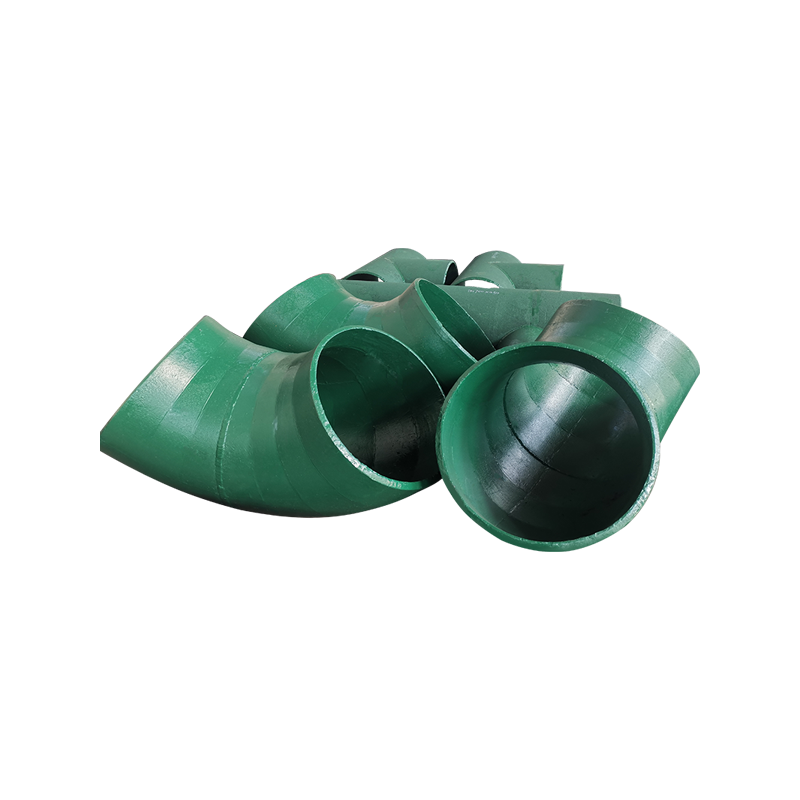
Bimetallic Wear-Resistant Pipes are constructed with a high-hardness inner layer—commonly made of high-chromium or alloy steel for abrasion resistance—bonded to a ductile structural backing, typically carbon or low-alloy steel. Each material inherently has its own coefficient of thermal expansion (CTE), which could create internal stresses during heating or cooling. To address this, the bonding process, which may involve explosion welding, hot rolling, or cladding, is engineered to accommodate the differential expansion between the layers. This careful engineering reduces the likelihood of stress accumulation, warping, or delamination at the interface, ensuring the pipe maintains both its structural integrity and wear resistance even when subjected to rapid or repeated thermal fluctuations.
2. Structural Backing Flexibility
The ductile outer layer of the pipe serves as a mechanical buffer that absorbs and redistributes thermal stress generated by the expansion or contraction of the inner wear-resistant layer. While the inner layer provides hardness to resist abrasion and erosion, the backing’s ductility allows controlled elongation and contraction along the pipe’s length. This combination ensures that the pipe can undergo dimensional changes due to temperature variations without inducing cracks, distortion, or adhesive failure in the inner layer. The backing’s flexibility is particularly important for pipes transporting hot fluids, abrasive slurries, or materials with fluctuating temperatures, where constant mechanical strain is applied.
3. Metallurgical Bonding Stability
High-quality Bimetallic Wear-Resistant Pipes rely on metallurgical bonding techniques such as explosion welding, roll bonding, or laser cladding to fuse the inner and outer layers into a single, integrated structure. This bond is designed to remain stable under differential thermal expansion and contraction. The interfacial metallurgy prevents delamination, cracking, or separation that can occur when materials with differing thermal behaviors are joined improperly. By maintaining a strong metallurgical connection, the pipes ensure that the inner wear-resistant layer remains firmly adhered to the structural backing throughout repeated thermal cycles and operational stresses.
4. Resistance to Thermal Cycling
Bimetallic Wear-Resistant Pipes are specifically tested and qualified for thermal cycling performance to simulate real-world conditions, such as transporting high-temperature slurries, molten media, or fluids with rapid temperature fluctuations. The combination of compatible CTEs, ductile backing, and robust metallurgical bonding allows the pipe to tolerate repeated heating and cooling without significant deformation or stress-induced fatigue. This resistance to thermal cycling ensures that the wear-resistant layer continues to provide protection against abrasion, erosion, and mechanical impact throughout the pipe’s operational life.
5. Design Considerations for High-Temperature Applications
In applications involving high-temperature fluids or industrial processes, the wall thickness, pipe diameter, and alloy composition are carefully engineered to minimize the impact of thermal expansion on both the inner and outer layers. Larger diameter pipes or pipes used in extremely hot media may be paired with expansion loops, joints, or fixed anchors to accommodate thermal movement without over-stressing the materials. The bimetallic design inherently reduces strain on the inner wear-resistant layer compared to monometallic pipes, extending service life and preventing premature failure. Proper material selection, geometric design, and installation are critical for optimizing performance under thermal stress.